Showing posts with label Consumers. Show all posts

Monday, October 13, 2008

GM Wars

Last week's announcement that UK Minister for the Environment, Jeff Rooker, was leaving government and Hilary Benn was appointed Secretary of State for Environment, Food and Rural Affairs led many to consider this a strong shift in the politics of GM food in the UK.

At a fringe meeting of the Labour Party Conference in Manchester, the then Minister (pictured at right) was credited with describing opponents of GM as being "... on a messianic mission. It is almost a religion where there isn’t any science base to it." However, a Jay Rayner writing in Sunday's Observer disagrees: "Benn has hardly been a friend of those who have been calling for an end to all GM experiments."

As the April report of the International Assessment of Agricultural Knowledge, Science and Technology for Development (IAASTD) explains there are new liability concerns for farmers with the advent of GM: "Farmers face new liabilities: GM farmers may become liable for adventitious presence if it causes loss of market certification and income to neighboring organic farmers, and conventional farmers may become liable to GM seed producers if transgenes are detected in their crops." In other words, the revolutionary changes in farming include not only influences upon traditional methods but also a revolution in the way in which farmers interact with their resources as patented materials.

As Rayner's article explains, the debate over GM is a debate not only in science, but also in politics and indeed commercial law. As a consumer issue, it is also a competition issue when intellectual property rights might interfere with access not only for consumers but for the farmers themselves. Noting Monsanto's practices of conscientious pursuit of litigation and the creation of seed "technology packages," the article raises the links between competition and intellectual property. Such packages (or bundling) as discussed earlier in Patenting Lives, are considered by the article to "force farms into a dependence on the company." It is this constraint upon ordinary farming practice that is credited with a breakdown in trust, not only for the technology but also for the commercial re-structuring of traditional farming practices.

Wednesday, August 06, 2008

Poland to Commence Public Consultations on GM Foods


Poland has remained one of the strongest opponents to the introduction of GM foods since the WTO Panel Decision on the approval and marketing of biotech products in the EU. The panel was assembled in response to complaints from the US, Canada and Argentina regarding the de facto moratorium on GM foods.

Nevertheless, opposition to GM persists throughout Europe and Poland in particular has continued to block approvals. In January this year, in the face of the deadline to comply with the Panel Decision, the Commission was expected to take legal action in the ECJ. In April this year, the Commission brought an action against Poland (C165/08) seeking a declaration that Poland was failing to comply with its obligations under Directive 2001/18/EC (on the deliberate release into the environment of genetically modified organisms) by introducing a ban on the movement of genetically-modified seed.

The case is yet to be heard, but meanwhile the Polish government will launch public consultations this week on the draft of new Polish Act on Genetically Modified Organisms, prepared by the Ministry of Environment. Among other things, the new Act introduces criminal penalties for unauthorised introductions and will give authorities the power to establish GMO-free areas, without necessarily imposing a blanket ban. Therefore, the new Act is proposed to take account of European obligations towards the introduction of GMO while at the same time inviting public consultations to take account of the widespread opposition in Poland to the introduction of GMO.

The consultation comes after an earlier survey, conducted for Gazeta Wyborcza by the PBS DGA market research company.

Poland is just one of several European countries opposed to GM, including the United Kingdom. The Environmental News Network reported this week that British opposition to genetically modified crops has increased with nearly all 54 trials over the last 8 years being attacked.

Thursday, January 17, 2008

Monsanto's Blooms and Booms

In the current climate of recessions and dwindling sales figures, agricultural companies are enjoying a bumper crop.

According to yesterday's Financial Times, Monsanto is the top seller of corn seeds in US and Brazil, where there is huge demand for Roundup-Ready soybean in particular. The corollary of this is that there was a 25% increase in the volume of herbicide in Brazil last quarter. According to the FT, "High food prices are inspiring some farmers to plant extra acreage and drench valuable plants in even more Roundup than usual to avoid crop losses.

Concerns, from both farmers and from consumers, over the risks of contamination are well-known. Indeed, these risks are part of the background to Europe's stance on GM, the subject of a complaint to the WTO by the US, Canada and Argentina.

One problem for farmers is that classical patent protection of GM seeds can lead to costly infringement proceedings, either through drift or through the usual practices of saving and re-using seed. In other words, the business models of patented seed industries are contrary to established farming practices, as the recent case of Homan McFarling v Monsanto Co shows. On the question of saving seed, McFarling's lawyers argued that patent law does not allow Monsanto to control the natural products (future seeds) from the seeds legitimately purchased and planted by McFarling. But the Supreme Court denied the petition for writ of certiorari and let stand the lower court ruling that second-generation seeds were copies, the saving of which amounted to unlicensed use of the patented invention.

The intrusion of multinational corporations upon local farming practices and communities was the subject of a 25th anniversary Pesticide Action Network (PAN) meeting in Penang, Malaysia in December. At the meeting, food security campaigners raised concerns over the concentration of sales within a small number of MNCs, including Monsanto.

Anil Netto reports that vertical integration, where the corporatisation and propertisation of agriculture dominates all stages in the food production cycle: "from the development of proprietary strains of DN and the sales of seeds to farmers right down to the distribution and retail sales of food products in supermarkets and hypermarkets." Monsanto recently purchased Agroeste Sementes, a Brazilian corn seed company.

Javier Souza Casadinho, Centre for Studies on Appropriate Technologies in Argentina, has been raised concerns that such activity leads to a concentration of market control in those MNCs: "The transnational corporations are buying up companies that have the potential to create added value ... [and] entering into contracts with food producers that will determine what is produced, how it is produced, for whom it is produced and at what price and quality."

In the same article, Antonio A Tujan Jr, International Director of the Ibon Foundation Inc, describes vertical integration as turning the market into a sellers' market, compromising the choice for consumers. This is very similar to the concerns raised in the GM debate in Europe, where the risk of contamination is conceptualised as a serious risk to the conditions for consumer choice of organic, conventional or GM products.

What is at stake is not only the limits of the product but also the limits of the markets that preserve consumer choice. And in technologies in living organisms, those limits are sometimes difficult to define.

Sunday, January 14, 2007

The Blots on the "Copy" Books - Copy Cats and Hokey Holsteins

Best wishes for 2007 from Patenting Lives. I hope everyone enjoyed the holidays!

Intellectual property news has a strange propensity for the "copy" - not only in copyright but also in patents. However, what is of particular interest in recent news is where the copy itself becomes the item of enhanced value - the case of cloned animals. For biotechnology, the "copy" is the original value in itself. But the technology aside, the general "mis-trust" of the copy is an interesting aspect of debates, ranging from the welfare of pets to the safety of steak trays in the supermarket.

Copy Cat

In the recent news, the birth of kittens to the world's first cloned cat, CC (pictured at right), and the news of Dundee Paradise, born to the clone of a champion dairy cow, has generated substantial debate concerning food safety and animal welfare.

CC, short for reportedly both Copy Cat and Carbon Copy (not even copies are accurate?), was born 5 years ago in December 2001 at the Texas A&M University, being a copy of the calico domestic shorthair cat, Rainbow (pictured at left).

The CC was then born to and raised by Allie, the tabby surrogate mother (pictured at right) meeting with both acclaim and controversy.

And in fact, on the "inaccuracy" of cloning, CC grew up neither to look nor to act like her mother, showing that environmental and non-genetic factors continue to be significant in determining the ultimate phenotype. In fact, fur patterning might have more to do with Allie's womb. A predisposition, in other words, should not be made a pathology.


And now CC has had 3 kittens of her own (pictured at left). However, CC achieved motherhood "old school" with Smokey, a male tabby bought as a partner for CC by Duane Kraemer (pictured at right), match-maker and professor of veterinary medicine at Texas A&M and member of the original cloning team. Mother and kittens are reportedly doing fine.


Hokey Holsteins

Before Christmas, the Holstein calf, Dundee Paradise, was born. Dundee Paradise is the daughter of a clone produced by US company Cyagra Clone, using cells from a champion Holstein cow (Holsteins are bred for their milk production).

But copies are inherently valuable, Dundee Paradise is reported to have been sold for £14 700 (although elsewhere the figure is reported to be much higher) to Princess Noora bint Isa al-Khalifa, of the Bahrain royal family. It is reported that the calf is being raised at a farm in Wales.

Reports, including the Guardian and Food Production Daily, have described the urgent concerns for the UK Food Standards Agency (FSA). The FSA met with European Officials Friday to decide whether tests would be required before marketing milk and meat from cloned animals. The European Regulation EC No 258/97 sets out the rules for authorising novel foods and novel food ingredients for marketing and consumption. The review of this Regulation is underway, with an online Consultation launched in June 2006, with a legislative proposal to be prepared this year. The earlier evaluation report of 2004 recommended further work to determine whether food from cloned animals should be treated as novel. At present, there is no specific regulatory framework for dealing with food and food ingredients from cloned animals.

The US Food and Drug Administration (FDA) approved the sale of cloned meat in US supermarkets late last year. The Independent reports that the draft rule allows the sale of meat and milk without requirements to state the origin on the labels. According to The Times, is thought it will be in supermarkets within months. However, the Telegraph suggests that most of the cloned animals will be reserved for breeding, with the offspring going to market. While welcomed by some groups, including the Biotechnology Industry Organisation (BIO), the approval has provoked significant criticism from consumer groups as well as experts in food safety. Furthermore, concerns for the welfare of cloned animals have been raised since the heady days of Dolly the Sheep (Dolly, pictured at right with her foster mum).

It is notable that the debate focuses attention on the relevance of consumer confidence and choice. Peter Melchett (pictured at left, photo courtesy of the Soil Association), policy director of the Soil Association, was quoted in Daily Telegraph as saying that the lack of regulation was "inexcusable," and "will undermine trust in British farming and British food." Calling for a moratorium on cloned animals, he described the current situation as "irresponsible and bad for the industry."

The Guardian reports that the FDA's approval has not translated into consumer confidence, and notes that the FDA plans to continue public consultations until April this year. In particular, the absence of obligations to disclose the origin of the food product has generated objections among activists both in food safety and the environment.

In an article in Nature, 8 January, US and Japanese researchers claim that cloned meat should not be treated differently, and advocate somatic cell nuclear transfer (SCNT) as the only means by which ensure survival of the genetic characteristics of the highest value animal. However, the lessons from Copy Cat make clear that not all desirable traits are necessarily guaranteed by the duplication of genotype.

Further, the "economic" interests of high value animals captures neither the consumer interests identified by Melchett, nor the ethical concerns for the welfare of the animals involved. As the GM debate in Europe has shown, many developments in the organic market reflect specific cultural and social concerns of Europeans. Despite the WTO Panel Decision on the complaints by the US, Canada and Argentina concerning the so-called moratorium on GM food in Europe, Austria has been allowed to maintain its ban on genetically modified crops, Austria has recently retained its right to ban GM corn by relying on the Biosafety Protocol. The Protocol allows such a ban where there is a lack of scientific certainty over the safety of the crop. The US has not signed the Protocol, and Canada and Argentina, although signatories, have not ratified the Protocol (signatures and ratifications).

It is this dimension of the market for organic food that was missed by David Miliband, UK Secretary of State for Environment, Food and Rural Affairs, when he told the Sunday Times recently that organic produce is "no better." The outcry was such that Miliband responded with praise for the "entrepreneurship" of organic farming in his blog. But again, to characterise the success of the organic food industry this simplistically dismisses the activity of consumers as nothing more than a "lifestyle choice." With respect to the environment, consumers are acting as citizens rather than making choices simply from the perspective of cost or prestige. As The Independent points out, David Miliband is surely "playing to the gallery" of the many farmers not using organic methods: "Instead of mocking this trend as unscientific, or jeering at it as a 'lifestyle' choice, which makes it sound like a slightly silly, magazine fashion, Mr Miliband would do better to praise it."


(Guest consultant on feline aspects: Roman the Cat)

Tuesday, September 19, 2006

Consumer Rights and FTAs on the European Agenda


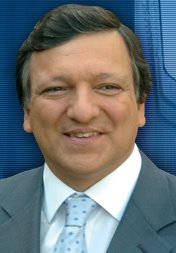
The President of the European Commission, Jose Manuel Barroso, has announced that consumer rights must become central to the economic and social agenda for the EU.

In a letter to colleagues, Barroso stated, "We must treat the internal market and social realities as one ... The citizens must move to the centre of our activities." In an article published today, Anne-France White suggests that this is a notable change from the focus on industry that has previously dominated the commission, as presented by EU executives Gunther Verheugen, Vice-President and European Commissioner for Enterprise and Industry, and Charlie McCreevy, European Commissioner for the Internal Market and Services.

Some commentators have suggested that Barroso's agenda is linked to his desire to secure a second five year mandate. But it is almost certainly motivated by attempts to revitalise moves towards a European constitution.

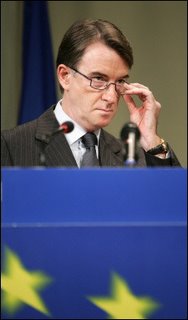
It has been predicted that the push will be resisted by some members of the Commission, including Charlie McCreevy and Peter Mandelson, European Commission for Trade.

Mandelson has been in the press recently on the Global Europe Strategy Paper, emphasising trade and the use of bilateral Free Trade agreements (FTAs) with key growing markets. In a speech echoing sentiments of US approaches to "contractual law-making," Mandelson says, "We must keep the WTO as the fundamental platform on which to build global liberalisation. There will be no European retreat from multilateralism. But we should also go beyond the EU's existing bilateral free trade agreements, by setting out the case for new free trade agreements designed to deliver more open markets and fairer trading conditions in new areas of growth, particularly in Asia". In that same speech, Mandelson emphasises the enforcement of intellectual property rights as central to the EU's trade strategy in China.

Friday, June 30, 2006

Civil Society - World Superpower


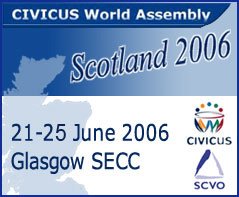
The CIVICUS World Alliance for Citizen Participation held its 6th World Assembly last week in Glasgow, Scotland, with meeting documents published by Terraviva, an independent publication of the IPS-Inter Press Service news agency.

CIVICUS is an international alliance of around 1000 members across about 100 countries, advocating citizen action and civil society participation throughout the world. Emphasising participation and active citizenry as the foundation for development, CIVICUS aims to provide information and resources for civil society. Its global headquarters are in Johannesburg, South Africa, although CIVICUS was originally based in Washington DC.

The Assembly came at a time of increasing attention on civil society activity, not only in terms of international debate, but also in the form of growing economic influence, in the form of consumer boycotts, ethical consumerism, and so on.

Nevertheless, some remain less optimistic about the capacity of civil society in the context of international norm setting and public policy making. In an article in OneWorld South Asia, Tiberius Baraza, a researcher in the Governance and Development Department at the Institute of Policy Analysis, Nairobi, Kenya, describes civil society participation as "elementary." Similarly, Faith Kasiva, executive director of the Coalition on Violence Against Women, describes the "consultation" process as mere "rubberstamping."

Nevertheless, civil society is undoubtedly growing as a critical aspect of international policy and legal developments. Professor Graeme Dinwoodie, speaking at the Birkbeck AHRC Copyright Network Conference earlier this week, suggests that the nature of international legal development is much more complex than intergovernmental debates and agreements, noting a greater role for non-governmental organisations and civil society.

This capacity of civil society and its importance in development is emphasised in a recent article considering socio-economic and political circumstances in Morocco. An effective civil society is identified as critical to the facilitation of development. However, development planners have suggested that the lack of such organisation in Morocco has slowed efforts to improve citizens' circumstances. In particular, the 5 year National Initiative for Human Development (NIHD), launched by King Mohamed IV last year, has been somewhat weakened by the absence of a "robust" civil society. This has been the case despite the explicit identification of civil society's involvement as critical to the plan at the time of its launch.

Importantly, what is emerging is the significance of civil society in the economics of development. Professor Robert Innes recently published a paper in the Economic Journal of the Royal Economic Society, describing the increasing sophistication of civil society strategies and consumer boycotts, particularly in the context of ethical consumerism.

In collaborating internationally on the development dimension of intellectual property laws, diverse civil society organisations are working together to increase their policy influence and interact critically with political entities. This week, civil society and governments met in Geneva for the Second Session of the Provisional Committee on Proposals Related to a WIPO Development Agenda. However, as reported by IP-Watch, claims of a persistent bias in favour of countries against the development agenda suggest that the future of these discussions may be threatened.

Nevertheless, arguably the presence of a "robust" international civil society is somewhat of an assurance that the development agenda will continue to "irritate" those most against.

Monday, June 26, 2006

GM Food in Europe and Beyond - Consumer Trends


In Brussels today, Friends of the Earth Europe (FoEEurope) urged EU Environment Ministers to introduce tougher safety rules on GM foods.

In today's press release, Adrian Bebb, GM Campaigner for FoEEurope, suggests that the European Food Safety Authority (EFSA) appears biased towards the biotech industry rather than the public, in defiance of public concerns about GM crops. The FoEEurope press release reports that the European Commission has also been critical of the EFSA. In April, the Commission criticised the EFSA, calling for greater transparency and scientific consistency on approvals on genetically modified organisms (GMO). Indeed, the Austrian Presidency suggested that the EFSA exercised GMO bias, approving GM products without proper research. The Austrian Presidency announced the re-opening of the debate over safety assessment in March this year. Austria remains one of the supporters of the de facto moratorium on GM crops in Europe. However, FoEEurope reports that the incoming Finnish Presidency has closed the doors of these discussions to environmental groups.

Previous posts, including the recent post on the Eurobarometer on biotechnology, have reported that European citizens remain concerned about the introduction of GM crops in Europe, despite an overall confidence in biotechnology as a whole. Tomorrow, in Luxembourg, environment ministers are to discuss new proposals to address the approval of GM products.

Co-existence of GM crops with traditional and organic systems of agriculture remains a critical issue in Europe, as reported here previously in Co-Existence and Co-existing: Disharmony? One of the important aspects of this debate in Europe is not only the cultural context for European agriculture, but also the commercial viability of organic markets.

However, increasingly, the commercial value of organic is being reported in other jurisdictions. US consumers are also becoming "greener," according to a report, by Brad Dorfman, from the Reuters Industry Summit in Consumer and Retail held last week. While GM continues to be associated with risks to the environment, such "greening" will arguably include similar choices with respect to GM food, as currently seen in Europe. Indeed, this comes at the same time as the recent decision in Santa Cruz County, California, to ban GM crops, as discussed in a previous post. It was suggested in a report in the San Francisco Chronicle online that the Santa Cruz County Supervisors were responding to Monsanto's purchase of Seminis, the world's largest vegetable and fruit seed company, prompting concern that the company would be extending GM technologies into crops traditionally grown in the Californian county.

And non-GM is said to be "booming" in the developing world as well, as reported by Reuters India. Indian soybean meal exports are expected to double, attributable to demand and competitive prices and because "Everywhere Indian meal was better accepted this year because it is non-genetically modified and of good quality," according to the Chairman of the Soybean Processor' Association of India (SOPA), Rajesh Agrawal.

In the United States again, the Foundation on Economic Trends (FOET), founded by economist, Jeremy Rifkin, released a white paper earlier this month, describing the "obsolescence" of GM and the growth of technologies compatible with agroecological approaches, blurring the common claims of "technophobe" levelled against those resisting GM crops. The white paper outlines the importance of marker-assisted selection (MAS) as the "new" agricultural technology, "within the context of a broader, more holistic, agroecological approach to farming."

This technology is being applied in research in Australia, in the case of wheat. In my homeland, research into non-GM wheat breeding technology is, according to an article by the Network of Concerned Farmers, leading the way. Research Director of the Cooperative Research Centre for Value Added Wheat, Dr Bill Rathmell, describes the importance of marker assisted selection in realising non-GM approaches to breeding technologies. The story also notes the "strong economic promise" of this research, as it was described in a recent study by the Australian Allen Consulting Group.

It seems that non-GM research is proving popular not only with consumers, but also with funders and research institutions, responding to what appear to be growing commercial advantages.

Wednesday, June 21, 2006

The "Eurobarometer" on Biotech

European citizens have been characteristically reluctant about the entry of GM food into European agricultural markets. Previous posts have looked at efforts to achieve adequate co-existence regulations ahead of admitting GM food into Europe. However, many have continued to reject the possibility of genuine co-existence of organic, traditional, and GM agriculture in Europe, particularly given the very specific nature of European agricultural practices, where many farms are just a few hectares in size. Despite the efforts towards co-existence on the one hand, complaints of a de facto moratorium on approvals of biotech products in Europe have been brought to the World Trade Organization (WTO) by the United States, Canada and Argentina. The final report of the Dispute Settlement Panel is expected sometime in September this year.

However, this week, a report on the most recent "Eurobarometer" on public attitudes to biotechnology suggests a shift. Prepared for the European Commission's Research Directorate-General (DG Research), the report is based on a survey of 25 000 respondents, undertaken in 2005.

The report concludes that just over half of European citizens are optimistic about biotechnology. Nevertheless, the concerns about GM food remain, with most of those surveyed stating that GM food should not be encouraged. The summary of key findings notes that "resistance to GM food is the exception rather than the rule."

Notably, the increased optimism in biotechnology more widely is largely influenced by a growing confidence in the EU regulation of the technologies. However, the ongoing resistance to GM food suggests that this confidence in regulatory frameworks does not extend to confidence in this area: "The introduction of the new regulations on the commercialisation of GM crops and the labelling of GM food (2001/18/EC) appears to have done little to allay the European public's anxieties about agri-food biotechnology."

Arguably, the very specific nature of agricultural practices, including the important diversity of European agricultural communities and the cultural importance of food, suggests that efforts at co-existence do not seem to be generating confidence in European consumers. Importantly, that lack of confidence is not a sense of alienation from the technology, nor can it be dismissed as merely resistance to the technology and science as such. Indeed, this is borne out by the survey's results in other areas, there being "no evidence that opposition to GM food is a manifestation of a wider disenchantment with science and technology in general."

Rather, public attitudes to GM food in Europe embody very particular issues and concerns specific to farming and food cultures in Europe.

Friday, June 09, 2006

Consumer Action Against Biotech Foods


The US non-profit and public interest environmental advocacy organisation, the Center for Food Safety (CFS), filed a lawsuit in the US District Court for the District of Columbia this week to compel the US government to impose mandatory labelling and safety reviews of GM foods.

The CFS has been campaigning for testing and labelling requirements for some time. This action follows a history of campaigning on GM foods, including the filing of a legal petition with the Food and Drug Administration (FDA), together with more than 50 consumer and environmental groups, back in 2000. However, the CFS reported that this petition was ignored, as it stepped up its campaign this week. Maintaining that the government should take responsibility for safety tests on GM food, the CFS argues that the FDA should not rely "the very companies that have a financial interest in bringing these biotech crops to market" for an objective and reliable report on the safety of those crops. At present the US does not require independent testing or labelling of GM crops. However, CFS Legal Director, Joseph Mendelson, stated in a Reuters report that this much change: "We think the FDA should be the gatekeeper." He continued that what should be required is "a mandatory process that has rigorous science behind it and public involvement and an actual approval process."

With offices in Washington DC and San Francisco, California, the CFS was established in 1997 by the International Center for Technology Assessment (CTA), to concentrate on campaigns in food production technologies and sustainable alternatives.

Wednesday, March 22, 2006

The Politics and Ideology of Intellectual Property - A New Political Order


I've just returned from a 2 day meeting, organised by the Trans Atlantic Consumer Dialogue (TACD) (a coalition of 65 EU and US consumer organisations), staged in Brussels. The meeting was a very full and provocative event and a valuable demonstration of the motivation and engagement of civil society on intellectual property issues and development. Indeed, it demonstrated the ever increasing importance of civil society in international norm setting, and the undeniable importance of "consumers" (indeed, producers in their own right) as stakeholders in international intellectual property law debate.

Significantly, the 2 days were a rich and diverse mix of perspectives, interests, and backgrounds, and included papers from Bruce Lehman (pictured at left), Senior Counsel with Akin Gump Strauss Hauer & Feld, and Chairman of the International Intellectual Property Institute IIIPI), a non-profit think tank and development organization located in Washington, D.C. From August 1993 through December 1998, Lehman served as Assistant Secretary of Commerce and Commissioner of the USPTO. As the Clinton Administration's primary representative for intellectual property rights protection, Lehman was involved in the negotiations leading to the TRIPS Agreement and the 1996 WIPO Copyright Treaties. Lehman made possibly one of the most highly blogged statements of recent days, saying "the TRIPS Agreement has been a huge failure for the United States," because in doing so the US agreed to provide market access to other countries with a comparative advantage on wages and the result has been that products are no longer manufactured in the US. Lehman maintained that it would have been preferable to have introduced labour and environmental standards into the agreement. "If anyone thinks this was a huge success for the United States they are 100% wrong."

In the final panel, Ed Mierzwinski (pictured at right), of Public Interest Research Groups PIRG, said that "the first message is that the old political model of the IP political economy is over" as is the model of creative process: "We have to protect the internet because it is the best opportunity we have to democratise information, protect diversity of culture, and ensure balance that's fair to all peoples of the world." Peter Drahos paraphrased John Stuart Mill, saying it was time "to allow for experiments in property." This, he said, was the key to recognising diversity rather than assuming that harmonisation is the only way to economic growth.

This was yet another brilliant event organised by TACD, in the tradition of the historic Future of WIPO Conference in Geneva in 2004. The indefatigable Jamie Love, Manon Ress, Ed Mierzwinski, Jill Johnstone, Ben Wallis, and a host of others should be congratulated for making these opportunities practical realities. As should every delegate in what was not only an invaluable but also a hugely motivating and engaging 2 days.

Make way for the new order.