Showing posts with label Patents - Europe. Show all posts

Monday, April 20, 2009

"Pig patent" and ban of genetically modified crops - The week on biotech patents in Germany

Last week has been a noteworthy one in Germany for biotechnological patents for agricultural applications and has received wide interest, nationally as well as internationally.
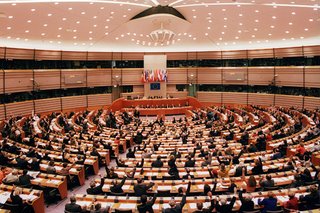
Hundreds of farmers, environmentalists and others gathered outside of Munich´s Erhardtstrasse 27, the principal seat of the European Patent Office (EPO) last Wednesday to protest against the so-called „Pig patent“ EP 1651777 B1 (above; 30 pigs "accompanied" the protests). The protesters used this opportunity to file a notice of opposition backed by more than 5000 individuals and more than 50 associations against the patent at the EPO which was granted on the 16th of July 2008 to Newsham Choice Genetics.
The protesters criticized the practice of patenting biological processes since “they have nothing to do with inventions”, as Hubert Weiger, the head of the “Bund Naturschutz Bayern”, an environmental group in Bavaria, stated. The farmers were specifically concerned that the continuing patenting of life stock would seriously aggravate their work by being threatened to pay excessive royalty fees to patentees which usually are multinational corporations in this area.
Initially the patent application contained 30 claims, from which some were related to animals as such, DNA sequences and the test kit. However the examination of the EPO has limited the claims to the screening method, whereas the claims to animals (pigs), the gene sequences and the test kit were rejected. The patent now solely relates to a “breeding method whereby a genetic analysis is carried out to screen for a variation (polymorphism) occurring naturally in some pigs, with a view to identifying those animals suitable for improving pork production and to selection appropriate breeding pairs” (see the press release of the EPO).
The main motto of the protest however was: “Stoppt das Patent auf die arme Sau” which stands for “No patents on the poor pig” and hereby – deliberately or negligently - wishes to render the patent as granted to a patent on pigs as such and hence being misleading. This may be excused due to the fact that this slogan is in its German meaning quite catchy and therefore serves the purpose of the protests. The press release of the EPO however clearly highlights that no patent on animals or gene sequences has been granted. The claims as they were initially filed may have lead to the realisation of such fears as expressed by the protesters but the examiners at the EPO did their job well in applying the rules of the European Patent Convention (EPC).
However, the protests and the hereby created public interest actually do highlight a major deficiency in the IP system and its public perception. It has not been achieved to thoroughly inform society as a whole what IP, and specifically patents is all about, how it operates and where its limitations are. IP has lately had a bad press whereas its benefits are often overseen. This needs to be addressed, bearing in mind its possible negative effects as well as to further explore how these may be overcome.
The press release by the EPO has highlighted in its last paragraph another rather more legal deficiency, which remains a hot topic and warrants determined action by policy makers. The EPO ceases to have jurisdiction totally 9 months after grant and the patent then falls within the jurisdiction of the nominated Member States. Post grant “quality control” by litigation on what should be patented is therefore seriously being hampered. In case of the “pig patent” (18 of the 35 Member States of the European Patent Organisation have been nominated for patent protection) this could mean multiple - and therefore expensive - litigation in all nominated jurisdictions.
Earlier this week the German Federal Minister of Agriculture, Ilse Aigner, has proclaimed a ban on the use of the genetically modified maize strain MON 810, which has been patented by Monsanto. The Minister was not hesitant to state that the decision was not a political one but was solely based on the facts of the case. Therefore, the decision should not be regarded as a fundamental verdict on the use of genetically modified crops in Germany, as Ms. Aigner affirmed. However, the political pressure is constantly growing. The Minister of Environment of the Federal State of Bavaria, Marcus Söder, has expressed the wish to make Germany a „genecrop-free zone“ and has reaffirmed this goal in a speech at Wednesdays´ protests against the “pig patent”. He joins the Ministry of Environment of the Federal State of Hessen, which is about to launch a legislative initiative in the „Bundesrat“, the 2nd chamber of parliament in Germany which consists of representatives from the 16 federal governments, to ban the patenting of newly bred animals and plants. By doing this, the Ministry wishes to call upon the German Federal Government to lobby the European Council and the European Commission to tighten Directive 98/44/EC on the legal protection of biotechnological inventions.

It now remains to be seen what impact the incidents of last week in Germany will have on the patenting of biotechnology. Mon 810 is currently banned in 6 countries of the European Union, including Germany. And it appears that the European Commission is willing to reconsider certain issues on patenting biotechnology.

Tuesday, January 30, 2007

Can you repeat that? Genetic technology and IP


The most striking thing about intellectual property frameworks and cloning is perhaps the way both appear to rely upon the ability to repeat the unrepeatable - the idea (?), the individual (?)

In an opinion piece in the New York Times, Denise Caruso says, "Someone (Other Than You) May Own Your Genes."

Caruso is responding to the recent approval by the US Food and Drug Administration (FDA) of food products derived from cloned animals, meaning that such products need not be labelled as such for consumers.

Caruso points to a survey by the Pew Initiative on Food and Biotechnology (Pew), which contradicts the often cited view that US citizens accept biotechnology in the food industry, and identifies similar concerns with industry and loss of consumer confidence that have been surveyed in Europe.

When it comes to biotechnology, the concerns raised by campaigners and researchers alike frequently refer to the specific character and base material of research in biotechnology, and a fundamental incompatibility with the patent system and its arguably greater suitability for "mechanical" innovation. Caruso quotes a comment from Tim Hubbard of the Human Genome Analysis Group at the Wellcome Trust Sanger Institute, "If you have a patent on a mousetrap, rivals can still make a better mousetrap. This isn't true in the case of genomics. If someone patents a gene, they have a real monopoly."

Under European patent law a patentable invention must be useful (industrial application), and the European Biotechnology Directive requires utility for patent protection to be available for genetic sequences (in other words, a use/purpose must be identified). Classical interpretation of patent protection might indeed mean that the identification of one use might result to protection over all uses - effectively, protection for a naturally-occurring substance. But, developments towards purpose-bound protection in Europe mean that this anomaly would be reconciled within the system. Similarly, in the US, efforts to patent isolated gene sequences in 1994 were defeated for lack of utility.

On the "property" aspects, Caruso considers the work of Stephen Hilgartner (pictured at right), Department of Science and Technology Studies (STS), Cornell University, who published a paper on these issues. "Acceptable Intellectual Property" is articulated upon the notion of "risk" and the conventional concept of "balance" in intellectual property protection, Hilgartner asks whether the protection of biotechnology fulfils that balance.

And indeed, strikingly, he suggests that theories of real property and the attending expectations and obligations might be more applicable for these technologies - that is, a certain reconciliation of the unrepeatable.

Monday, January 22, 2007

EUPACO - Brussels 24 January 2007


The European Patent Conference (EUPACO) will be held in Brussels this week, Wednesday 24 January (programme).

The Conference is free and open to all, but registration is advised. Speakers from the US and across Europe (including myself) will present current research, policy, and proposals for reform of the EU patent system.

The EUPACO is an initiative of the Foundation for a Free Information Infrastructure (FFII), directed at assembling experts and stakeholders from a variety of perspectives for the examination and discussion of patent law in Europe.

FFII is a not-for-profit civil society organisation concerned particularly with information technology and market competition in this sector. In particular, the FFII has been very active in developments concerning the European Patent Litigation Agreement (EPLA). FFII has expressed concerns with these reforms, and has produced the FFII Analysis of the EPLA to set these out.

Although FFII is well known for its contribution to debates on the impact of patent frameworks in software development, the EUPACO will be examining patent frameworks in diverse fields of technology, with a view to comprehensive debate on future patent policy in Europe.

The Brussels meeting will be an opportunity opportunity for individuals from diverse perspectives - including researchers, practitioners, industry and civil society - to examine patent law reform in Europe.

Friday, November 17, 2006

Criminal Enforcement Directive - A Review of the Rapporteur's Report - Too Late to Lock the Stable Door?


The European Parliament's Committee on Legal Affairs is due to discuss at Monday's meeting the Rapporteur's draft report on the proposed Criminal Enforcement Directive.

Having just reviewed the English translation of the Rapporteur's Report, I would suggest that it narrows significantly the scope of the proposed Directive, but it remains a Trojan Horse for first pillar powers.

Definition for Intellectual Property - Whither a Patent?
In particular, the Rapporteur proposes a definition for intellectual property which excludes patents. The attempt to define intellectual property proved to be very controversial in the passage of the earlier Enforcement Directive, 2004/48/EC. This discord eventually led the Commission to propose its own list of intellectual property rights, 2005/295/EC. One of the reasons patents are excluded in the current report, according to the Rapporteur, is the European Parliament's rejection of the Directive on the Patentability of Computer-Implemented Inventions (Software Directive). The Rapporteur concludes that the Parliament considered it inappropriate to legislate on patents. Accordingly, he suggests that criminalising patent infringement would be "a dangerous foray into a very complex area."

The Rapporteur's report also proposes that the Directive be limited to intellectual property rights which are harmonised at the Community level, and does not include other national "intellectual property rights."

Other Definitions

The Rapporteur's report also proposes definitions for other key phrases, including that of infringement on a commercial scale. The idea of "commercial scale" previously proved problematic during the negotiation of the Enforcement Directive. In the Enforcement Directive, the problems of definition were to some extent remedied by Recital 14. However, the definition proposed in the current Rapporteur's Report on the proposed Criminal Enforcement Directive seems considerably broader.

Does the Punishment fit the "Crime"?
The Criminal Enforcement Directive is presented on the basis of being a response to serious organised crime, the potential threat to public safety, and to the "serious threat to national economies and governments." The Rapporteur also acknowledges that "serious" intellectual property crimes can be committed outside organised crime, and therefore extends high levels of punishment to all serious crimes, rather than limiting such punitive measures to those actions committed by large criminal organisations.

On a number of occasions, the Rapporteur points out the fact that there are domestic provisions on criminal infringement in the domestic laws of many Member States, and he discusses harmonisation in this context. One intriguing point which seems to be overlooked is that the sentence of a minimum maximum of 4 years imprisonment proposed by the Criminal Enforcement Directive ignores the various sentencing rules across the Member States. In the UK, for example, the practical effect of a 4 year sentence is that the person will be eligible for release after 2 years. Therefore, it is unclear how the Commission can rely on terms like 4 years imprisonment, in the context of a harmonised approach, when it is presumed that the time served may mean quite different things for different Member States.

Competence - Win the Horse or Lose the Saddle
Finally, on the issue of competence (see the earlier post, A Trojan Horse?), the Rapporteur's report indicates that the proposal falls within the Commission's "broad interpretation" (my emphasis) of its powers under the first pillar. The Commission has relied upon Case C176/03, Commission v Council (environmental law), to use first pillar powers to impose criminal sanctions. The Commission issued a Communication on the implications of that judgment on criminal law provisions under the first pillar. After that, there was a Resolution on 14 June 2006, where the European Parliament welcomed the ECJ's judgment, although had reservations about the Commission extending it further.

The Rapporteur takes the view that applying criminal penalties to patent rights does not seem particularly appropriate in itself, and does not follow previous actions of the European Parliament. He also concludes that there is no urgent need to intervene on criminal penalties for patent infringement. What is problematic about his position is that he doesn't come to any opinion on whether the Commission's position on broad interpretation is correct. But he does believe that the scope of the proposed Directive seems to be too broad.

It's unlikely that many Member States will find much solace on the competence issue within the Report of the Legal Affairs Committee. Although, in terms of the Directive as a whole, it provides many sensible limitations. But one can still question the necessity of the Directive at all.

Tuesday, November 14, 2006

The Criminal Enforcement Directive - A Trojan Horse?

patentingLIVES

Last night the Patenting Lives network hosted its first in a series of workshops on current issues in patent law, policy and development.

The first in the series was concerned with the proposed Directive of the European Parliament and of the Council on criminal measures aimed at ensuring the enforcement of intellectual property rights (Criminal Enforcement Directive also known as IPRED2 in view of its amendment this year). One participant described the Directive as the possible "Trojan Horse" that may be used to expand EU competence in the area of criminal justice, moving towards first pillar matters.

Background
The present proposal for IPRED2 is being considered by the European Parliament and the Council at present, as the Directive must be adopted following the co-decision procedure.

In the European Parliament it is presently before the Legal Affairs Committee. The rapporteur, Nicola Zingaretti (an Italian MEP), will present a draft report on the proposed Directive at the next meeting of the Legal Affairs Committee, 20 November 2006. If and when the Committee approves the report, there will be a vote at a plenary session of the European Parliament for its first reading.

Meanwhile, Member States are continuing to negotiate the text before the Council. The most recent Council text includes a number of amendments to the original Commission proposal. But until both the Council and the Parliament have finished the first reading the Directive cannot progress any further. At present, it looks like it might be held up before the Council, even if the Parliament is making progress.

The European Union is structured as "three pillars," - the European Communities, common foreign and security policy, and cooperation in justice and home affairs. Some Member States have indicated that they believe that the measure is not within Community competence as a first pillar instrument. Instead, they suggest that it should be a Framework Decision under the third pillar. It is anticipated that the Court of Justice's ruling in Case C-440/05 Commission v Council (ship source pollution) will give a good indication of whether or not IPRED2 can go forward as a first pillar Directive or will need to revert to being a Framework Decision.

Workshop
Around 35 participants took part in the seminar, which included presentations from Gwilym Roberts, partner at Kilburn & Strode Patent Attorneys; Phillip Johnson, DTI and legal adviser to the UK Patent Office, but speaking in his personal capacity; and Julian Heathcote Hobbins, senior legal counsel for the Federation Against Software Theft (FAST).

All speakers had reservations about the proposed Directive, some stronger than others, including predictions that it would be "completely disastrous."

Gwilym Roberts (pictured at left) very importantly identified not only the way in which it might impact upon patent practice, but also the significant commercial effect of criminalising patent infringement, "changing the game theory of decision-making at the commercial level." Rather than being able to negotiate normal commercial risk, commercial entities would now be constrained in their daily commercial decisions by the threat of criminal sanctions.

As Gwilym explained, copying a CD in large-scale copyright piracy is quite a different concern from the very complicated questions to be considered when trying to determine whether a patent has been "copied." The application of criminal sanctions to all areas of intellectual property simply cannot be justified by the same arguments. He said that the patent system is not designed to implement public health policy (such as the arguments concerned with health risks and counterfeit medicines) and should not be expected to deliver such regulation. Gwilym predicted that the Directive would effect a "significant stifling of innovation."

Julian Heathcote Hobbins (pictured at left) gave a detailed introduction to the activities of FAST and its position in the debate. Julian also identified the problem with trying to polarise the activities of users and proprietors as two mutually exclusive groups. Often in patentable technologies, proprietors are in effect potential infringers because of the very nature of innovation; therefore, as the workshop discussion largely considered, criminalising patents would interfere with the nature of innovation because it would elevate the risk of potential infringement to a level that noone would want to try to negotiate.

Phillip Johnson (pictured at right), who practised as a criminal barrister before moving into IP, gave a detailed background to the Directive. He noted the significance of applying criminal measures to all areas of intellectual property rights and outlined the potential public interest concerns with this kind of approach. In particular, the nature of criminal prosecution was discussed, including the consequences for the taxpayer. The impact of possible moves toward jury trials was also discussed, with the workshop discussion raising concerns over the possibly adverse impact on subsequent law, causing damage to the patent system in the long term.

In discussion, the impact on small and medium enterprises was considered as a potentially negative rather than positive consequence. The threat of criminal prosecution was debated as a way in which bigger interests could throw their weight around, effectively changing the landscape of the industry, with SMEs discouraged from entry into the market. Interestingly, Gwilym noted that the threat of criminal sanctions would be a public relations bonus to right-holders, giving a problematic moral high ground. He noted that, in contrast to the current bad press, a somewhat worrying outcome might be that prosecution of patent infringement is now re-presented as a "protection of the public" argument. Some participants suggested that big pharma was "playing the public health card."

Future Workshops
More workshops are planned, including discussions on the forthcoming report of the Gowers Review, a workshop on biopharmaceuticals and biosimilars, and more. If you'd like further details, email me, Johanna Gibson, to be on the mailing list, or check this blog and Patenting Lives for more.

Friday, October 13, 2006

European Parliament Votes to Postpone Membership of EPLA


Yesterday, members of the European Parliament voted at the Brussels plenary session to approve a resolution postponing EU membership of the European Patent Litigation Agreement (EPLA). In a vote of 494 against 109, with 18 abstentions, the result was largely due to major concerns with the text of the EPLA. One motion for a resolution, submitted by Sharon Bowles (ALDE Group) and others, described the need for "significant improvements" to the text.

The Working Party on Litigation was established at the Paris Intergovernmental Conference of 1999, and mandated, among other things, to produce a draft text for a common European patent system. The sub-group of the Working Party produced the first draft of EPLA in 2004, with a revised draft submitted to the Working Party in December 2005 (to take account of the Enforcement Directive, 2004/48/EC).

Yesterday's decision postpones moves towards a European patent court, but does not mean a complete rejection of the Agreement. One of the particular sticking points was a perceived lack of democratic control over the granting of patents. During the debate held 28 September, Richard Corbett (MEP) expressed "grave doubts about the proposals for a system of patent courts that would be at arm's length both from democratic institutions and from proper judicial review." He continued, "The draft resolution of on the European Patent Litigation Agreement could, if implemented, place patent disputes in the hands of those who have a vested interest in a very wide use of patents."

Nevertheless, Members remain committed to the Community Patent as part of what Charlie McCreevy suggests is a "better, cheaper, more reliable patent system." And in a recent briefing produced by the London School of Economics and Political Science (LSE), Centre for Economic Performance (CEP), the greater productivity of the US was attributed in part to Europe's ongoing failure to create a Community patent. The CEP briefing notes that registering a patent in the EU costs 5 times more than in the US. The debate concerning patent protection in Europe continues in the context of the revitalised Lisbon Agenda and concerns for Europe's competitiveness and innovation in a global market.

Civil society groups such as the Foundation for a Free Information Infrastructure (FFII) have expressed ongoing cynicism regarding the cost and efficiency promises of the EPLA. In a press release in September, Pieter Hintjens, president of FFII said, "The EPLA means higher costs for small businesses, and increased litigation risks. More US-style litigation is not the solution. We just need a better patent office."

FFII board member, Jonas Maebe, has said "We're 80% happy with the result."

Friday, June 30, 2006

European Patent Office - Annual Report Now Available


The European Patent Office (EPO) today published its Annual Report for 2005.

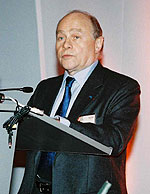
In his Foreword to the Report, Professor Alain Pompidou, President of the EPO, emphasises the quality of patents as a critical issue: "Quality is a key to the future of the European patent system."

As well as the quality debate, Professor Pompidou highlights the political, cultural, and ethical context in which technologies are patented. In this area, the Scenarios project is an important initiative of the EPO. In this project, the EPO has undertaken extensive interviews internationally with users, experts, and critics. I was interviewed as part of this project earlier this year.

The material arising from these interviews will be compiled and published in 2007, as the basis for future policy development in Europe for 2020. As Pompidou states, "By systematically examining and analysing the material it has gathered, the Office hopes to establish meaningful scenarios for the future development of the patent system."

The Annual Report is available on the website as well as in hard copy by emailing infowien@epo.org.

Tuesday, June 20, 2006

European Patent Troubles


European innovation has been described as "at risk" in a recent article by Chris Jones, if delays to the introduction of the Community Patent continue.

Measuring "innovation" through patent applications, Europe is filing far fewer applications than the rest of the world. Arguably relevant here, however, is the very nature of European innovation cultures, including the existence of very small enterprises (of just a few people), and the possible lack of access on the part of such small players to the rather expensive investment of patent protection. Therefore, underpinning European policy and legal developments is the cost of the system itself and the need to ensure the diversity of players taking advantage of the system. Indeed, Professor Alain Pompidou, the President of the European Patent Office (EPO), is quoted in the Jones as saying, "The systematic use of patents to protect technical innovations is important if the EU's Lisbon strategy is to be a success. One aim of an effective innovation policy should therefore be to develop patent use among European companies, especially small and medium-sized firms." And in an interview at the end of last year, Pompidou stressed the importance of the patent system in this context: "The EPO has a clear role to play in the innovation process in Europe. By securing the transition from invention to innovation and facilitating access to the market-place, the patent system constitutes the key mechanism for such a transformation process."

Despite this support, the Community Patent has had quite a troubled history. Discussions have continued for other 30 years, and yet the Community Patent Convention (CPC) continues to stall. The most recent version, the Amended CPC (1989), is yet to come into force. On the other hand, the Community Trade Mark and Community Design have proceeded successfully.

In 2000 the European Commission revitalised discussion on the Community patent, on the basis that a European wide patent would be a tremendous advantage to European innovation, and published a proposal for a Council Regulation on the Community Patent. In 2003, the Common Political Approach was agreed, but to date this earlier enthusiasm has become somewhat distracted.

The European Patent Convention (EPC) sets out the legal framework for states to come to special agreements concerning translations, as well as the institution of a central court to enforce the Community patent.

In 2005, the EPO pushed the discussions in the direction of the implementation of the London Agreement, which would allow for EPO States to waive their right under Art 65 ("Translation of the Specification of the European Patent") of the EPC. Art 65 gives a State the right to require a full translation into one of that State's official languages. In other words, the patent must be filed in one of the EPO's official languages (French, English, or German). However, at present, the patent must also be translated into the official language of any State in which it is it be protected. Under the London Agreement, the patent would be protected without translation. Therefore, a patent could be filed in German, and nevertheless protected in France despite no French translation (although it may be that courts would require translation in proceedings).

The London Agreement was lauded as recently as yesterday, in a press release of the EPO, where its adoption was explicitly advocated towards saving European firms up to EUR 500 million each year. However, at this stage, the Agreement is yet to come into force. It will come into force only when 8 signatories - including France, UK, and Germany - have ratified the Agreement. Germany and the UK have ratified the Agreement (a consultation on the ratification process was undertaken by the UK Patent Office in 2004). But its progress is stalled until France does so - which by all accounts seems unlikely.

The European Patent Litigation Agreement (EPLA) is a similar exercise in efficiency, providing for the establishment of a European Patent Court and, thus, greater access to the enforcement process for small companies.

Earlier this year, the Commission launched a consultation on future patent policy in Europe, including the future of the Community Patent. Stakeholders and industry submitted their contributions in April and a public hearing is to be held 12 July 2006 when the results of the consultation will be considered.

Friday, November 25, 2005

Intellectual Property "Theft" - A European Crime?


A press release of the European Commission has announced the controversial plan to create a body of pan-European criminal law, with seven framework decisions having already been adopted (but on erroneous legal bases). The proposal is to adopt directives or other Community legislative measures to replace these decisions as a matter of priority.

This action is made possible by an ECJ ruling in September in environmental law, which stated that the Community is competent to require Member States to impose sanctions (including criminal sanctions) at the national level if it is to attain a Community objective. However, the plan is strongly opposed by the UK and other member states as an unacceptable dissipation of national sovereignty in what is perceived to be a great shift of power to the European Union. Anthony Browne, of The Times, London, describes it as a plan to remove Britain's right to decide what constitutes a crime. However, the Commission press release maintains that the proposal is a response to a "duly justified need" and that such exercise of Community competence in criminal matters would be in view of "the overall consistency of the construction of the criminal law of the Union."

Of particular concern is the possibility that intellectual property infringement will be introduced as a European crime in the future. Although not one of the first seven offences identified for immediate recognition, intellectual property "theft" has been suggested by the Commission as a possible candidate as a future European crime, alongside race crimes and trafficking in human organs. This indicates a somewhat disconcerting emphasis on that "theft" as a kind of fundamental injustice. Against individuals or the Community?