Showing posts with label Stem Cells. Show all posts

Thursday, October 05, 2006

USPTO to Reexamine Stem Cell Patents

(Also posted on IPmed)


A request to the United States Patent and Trademark Office (USPTO) to reexamine 3 patents relating to stem cell technology has been granted.

The requests came from California-based consumer group, Foundation Taxpayer and Consumer Rights (FCTR), and were filed in July on the Foundation's behalf by the Public Patent Foundation (PUBPAT).

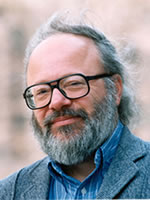
The patents are owned by the Wisconsin Alumni Research Foundation (WARF) whose researchers include James Thomson (pictured at left), who led the team which, in 1998, made the first successful isolation of human embryonic stem cells. Thomson later founded Cellular Dynamics International (CDI), a private biotechnology company based in Madison, Wisconsin. Last year, the State of Wisconsin granted CDI a US$1M Technology Development Grant and a US$1M Technology Development Loan.

The 3 patents in question are US Patent 5,843,780 (780 communication); 6, 200, 806 (806 communication); and 7, 029, 913 (communication forthcoming). The requests from FCTR were accompanied by the declaration of Jeanne F Loring, Adjunct Associate Professor at the Burnham Institute, and include references to prior art not considered at the time the patent was granted. This raises a "substantial new question" (SNQ) of patentability and grounds for a complete reexamination of the patent claims on the basis of prior art.

The requests also included reference to public harm, but the USPTO communication is clear that this is beyond the scope of reexamination. Nevertheless, John M Simpson, Stem Cell Project Director of FTCR, has welcomed the announcement and condemned WARF's patent policy, described in the press release as "WARF's aggressive assertion of patents." Simpson claims that WARF has "a history of putting profits before public benefit." An earlier press release quotes the Juvenile Diabetes Research Association (JDRF) as saying that WARF patents pose a "major inhibition to productive scientific research."

Should WARF really have a monopoly on the toolbox?

Wednesday, July 26, 2006

Stem Cell Compromise

At Monday's meeting of the Competitiveness Council, agreement was finally reached on EU funding of stem cell research through what has been described as a "historic" compromise. Under the terms of the compromise, the part of the research process that requires the destruction of human embryos, to allow the harvesting of embryonic stem cells, will have to be funded by other means.

The positions of different member states over the direction of FP7 funding to stem cell research were outlined in "Heated Debates". In a campaign led by the German Federal Minister for Education and Research, Dr Annette Schavan, Germany has been strongly opposed to the use of EU funding for stem cell research, subsequently joined by a group of countries in opposition to the proposed expenditure. However, as mentioned in "Heated Debates" the movement of Slovenia towards the support for the research left the opposing countries unlikely to achieve a blocking minority.

And so, after a lengthy debate, Germany supported Monday's compromise which will allow individual member states to continue the funding of stem cell research with money from the EU's £37 billion science budget (around 50 billion euros). The bargain was the assurance from the European commission that no EU money would be directed to projects involving the destruction of human embryos. Annette Schavan, explained that the important point was "that there can be no financial incentives for the destruction of embryos."

Originally the divisions between for and against were described as divisons between Roman Catholic and non-Catholic countries. However, this characterisation has been shown to be too simplistic, with Portugal strongly in favour of stem cell research. According to Nicholas Watt's report in the Guardian newspaper, Portugal's Minister of Science, Technology and Higher Education, Dr Jose Mariano Gago, "turned on his opponents" and argued very emotively and personally, "I hope that none of the colleagues will ever need treatment which does not yet exist for dementia and Alzheimer's. These are treatments which could be made possible by research with stem cells. If you find yourself in such a position I hope you would be able to say you did not stand in the way of such research."

The decision reflects an emphasis on the sovereignty of individual members of the European Union, allowing individual states to decide whether to spend EU money in this way within its own borders.

Following US President Bush's veto last week of federal expenditure on stem cell research, a potential "US brain drain" has been described, with scientists heading to the EU to take advantage of the research funding compromise. As reported in the Guardian, Lord Sainsbury has described the US President's position as "a very negative position."

Earlier this week, Professor Stephen Hawking of the University of Cambridge warned the EU against taking the "reactionary lead" of the US. However, Professor Hawking has described the EU compromise as a "fudge," and has raised concerns that it mounts practical limits to the research.

Nevertheless, yesterday, just one day after the agreement, the University of Cambridge announced the new £10million Cambridge Stem Cell Inititiative, The Institute for Stem Cell Biology. The new centre will be dedicated to stem cell research, under the direction of Austin Smith, the former director of the Institute for Stem Cell Research (ISCR) at the University of Edinburgh. Funded primarily by the Wellcome Trust, the new centre will open in December.

Monday, July 24, 2006

Heated Debates - EU Stem Cell Research


The temperatures in London might be soaring at the moment, but they're rivalled by the heat over stem cell research in Europe.


EU Ministers will meet today to consider ongoing obstacles to funding agreement, ahead of approving the EU's 7th Research Framework Programme (FP7). Framework Programmes are the main mechanism for the funding of research and development in the European Union, and have been implemented since 1984.

Each FP runs for a period of 5 years, with a one year overlap with the subsequent FP. However, it has been proposed that FP7 should run for 7 years, commencing 1 January 2007 and expiring in 2013. FP6 will run up until the end of this year, but FP7 is still yet to be approved.

Agreement on the Programme must be reached at today's meeting of the EU's Competitiveness Council. Stem cell research remains a significant obstacle, along with other debated areas including concerns over nuclear research and training activities, and the new European Research Council (ERC) initially proposed in 2002 and subsequently developed through public consultation and the work of the European Research Council Expert Group (ERCEG). But it is the controversy over the funding of stem cell research which threatens to prevent an agreement at today's meeting.

9 high level themes have been proposed for EU action in FP7, including health. Strict funding procedures would ensure that EU funds would not support research into the use of stem cells for reproductive cloning or the creation of human embryos. However, Monday's meeting is expected to vote in favour of opposing EU funding on embryonic stem cell research.

But the vote is in the balance. Although Germany, Poland, Austria, Slovakia, Lithuania, Malta, and Luxembourg are likely to vote against the funding of stem cell research, this vote will fail unless one other member state supports the group to create a blocking minority. Slovenia, once thought to be a possible waverer, defected from the blocking minority over the weekend. However, Italy and Ireland may yet join the Berlin-led group to vote against stem cell funding.

The EU heat follows that of last Wednesday, when US President Bush rejected legislation passed by Congress that would have allowed federal expenditure on research into embryonic stem cells. President Bush claimed, "It crosses a moral boundary that our decent society needs to respect, so I vetoed it."

Thursday, January 12, 2006

Cloning Celebrity Caution


As reported in the Guardian, the Royal Society has warned scientists against the perils and temptation of the "public acclaim" attached to cloning and stem cell research. The warning follows the recent controversy over the fabricated research findings of "stem cell pioneer," Korean scientist Dr Woo Suk Hwang.


The scandal broke just prior to the International Stem Cell Forum, which meets tomorrow in Paris, where Carine Camby, general director of L'Agence de la biomedecine (created by the Bioethics Act of 2004), will clarify the details and rules governing embryo research in France, as contained in the Bioethics Act.

Friday, November 18, 2005

"The Year of the Stem Cell" - Interview with George Annas


In "The Year of the Stem Cell," George Annas is interviewed by Sujatha Byravan (President, Council for Responsible Genetics, US), published in the latest issue of Gene Watch. Of particular interest to Patenting Lives are his comments on public regulation and how to ensure fair and equitable distribution to the public of the benefits arising from any such research. Any such regulation should ensure that the outcomes of publicly funded research do not become purely private concerns, especially when national public health systems are not necessarily effective in ensuring the transfer of such benefits to the general public. Indeed, George Annas states that restrictive patenting in this area of scientific research should be prohibited. He also raises the importance of the public accountability of such research as the primary concern. Perhaps, the question is raised and indeed remains as to whether such accountability can ever be achieved where commercial measures of invention, such as patenting measures, persist as the model of dissemination for biotechnological innovation, at least in these particular areas of scientific industry and research.