Showing posts with label Organic. Show all posts

Sunday, January 14, 2007

The Blots on the "Copy" Books - Copy Cats and Hokey Holsteins

Best wishes for 2007 from Patenting Lives. I hope everyone enjoyed the holidays!

Intellectual property news has a strange propensity for the "copy" - not only in copyright but also in patents. However, what is of particular interest in recent news is where the copy itself becomes the item of enhanced value - the case of cloned animals. For biotechnology, the "copy" is the original value in itself. But the technology aside, the general "mis-trust" of the copy is an interesting aspect of debates, ranging from the welfare of pets to the safety of steak trays in the supermarket.

Copy Cat

In the recent news, the birth of kittens to the world's first cloned cat, CC (pictured at right), and the news of Dundee Paradise, born to the clone of a champion dairy cow, has generated substantial debate concerning food safety and animal welfare.

CC, short for reportedly both Copy Cat and Carbon Copy (not even copies are accurate?), was born 5 years ago in December 2001 at the Texas A&M University, being a copy of the calico domestic shorthair cat, Rainbow (pictured at left).

The CC was then born to and raised by Allie, the tabby surrogate mother (pictured at right) meeting with both acclaim and controversy.

And in fact, on the "inaccuracy" of cloning, CC grew up neither to look nor to act like her mother, showing that environmental and non-genetic factors continue to be significant in determining the ultimate phenotype. In fact, fur patterning might have more to do with Allie's womb. A predisposition, in other words, should not be made a pathology.


And now CC has had 3 kittens of her own (pictured at left). However, CC achieved motherhood "old school" with Smokey, a male tabby bought as a partner for CC by Duane Kraemer (pictured at right), match-maker and professor of veterinary medicine at Texas A&M and member of the original cloning team. Mother and kittens are reportedly doing fine.


Hokey Holsteins

Before Christmas, the Holstein calf, Dundee Paradise, was born. Dundee Paradise is the daughter of a clone produced by US company Cyagra Clone, using cells from a champion Holstein cow (Holsteins are bred for their milk production).

But copies are inherently valuable, Dundee Paradise is reported to have been sold for £14 700 (although elsewhere the figure is reported to be much higher) to Princess Noora bint Isa al-Khalifa, of the Bahrain royal family. It is reported that the calf is being raised at a farm in Wales.

Reports, including the Guardian and Food Production Daily, have described the urgent concerns for the UK Food Standards Agency (FSA). The FSA met with European Officials Friday to decide whether tests would be required before marketing milk and meat from cloned animals. The European Regulation EC No 258/97 sets out the rules for authorising novel foods and novel food ingredients for marketing and consumption. The review of this Regulation is underway, with an online Consultation launched in June 2006, with a legislative proposal to be prepared this year. The earlier evaluation report of 2004 recommended further work to determine whether food from cloned animals should be treated as novel. At present, there is no specific regulatory framework for dealing with food and food ingredients from cloned animals.

The US Food and Drug Administration (FDA) approved the sale of cloned meat in US supermarkets late last year. The Independent reports that the draft rule allows the sale of meat and milk without requirements to state the origin on the labels. According to The Times, is thought it will be in supermarkets within months. However, the Telegraph suggests that most of the cloned animals will be reserved for breeding, with the offspring going to market. While welcomed by some groups, including the Biotechnology Industry Organisation (BIO), the approval has provoked significant criticism from consumer groups as well as experts in food safety. Furthermore, concerns for the welfare of cloned animals have been raised since the heady days of Dolly the Sheep (Dolly, pictured at right with her foster mum).

It is notable that the debate focuses attention on the relevance of consumer confidence and choice. Peter Melchett (pictured at left, photo courtesy of the Soil Association), policy director of the Soil Association, was quoted in Daily Telegraph as saying that the lack of regulation was "inexcusable," and "will undermine trust in British farming and British food." Calling for a moratorium on cloned animals, he described the current situation as "irresponsible and bad for the industry."

The Guardian reports that the FDA's approval has not translated into consumer confidence, and notes that the FDA plans to continue public consultations until April this year. In particular, the absence of obligations to disclose the origin of the food product has generated objections among activists both in food safety and the environment.

In an article in Nature, 8 January, US and Japanese researchers claim that cloned meat should not be treated differently, and advocate somatic cell nuclear transfer (SCNT) as the only means by which ensure survival of the genetic characteristics of the highest value animal. However, the lessons from Copy Cat make clear that not all desirable traits are necessarily guaranteed by the duplication of genotype.

Further, the "economic" interests of high value animals captures neither the consumer interests identified by Melchett, nor the ethical concerns for the welfare of the animals involved. As the GM debate in Europe has shown, many developments in the organic market reflect specific cultural and social concerns of Europeans. Despite the WTO Panel Decision on the complaints by the US, Canada and Argentina concerning the so-called moratorium on GM food in Europe, Austria has been allowed to maintain its ban on genetically modified crops, Austria has recently retained its right to ban GM corn by relying on the Biosafety Protocol. The Protocol allows such a ban where there is a lack of scientific certainty over the safety of the crop. The US has not signed the Protocol, and Canada and Argentina, although signatories, have not ratified the Protocol (signatures and ratifications).

It is this dimension of the market for organic food that was missed by David Miliband, UK Secretary of State for Environment, Food and Rural Affairs, when he told the Sunday Times recently that organic produce is "no better." The outcry was such that Miliband responded with praise for the "entrepreneurship" of organic farming in his blog. But again, to characterise the success of the organic food industry this simplistically dismisses the activity of consumers as nothing more than a "lifestyle choice." With respect to the environment, consumers are acting as citizens rather than making choices simply from the perspective of cost or prestige. As The Independent points out, David Miliband is surely "playing to the gallery" of the many farmers not using organic methods: "Instead of mocking this trend as unscientific, or jeering at it as a 'lifestyle' choice, which makes it sound like a slightly silly, magazine fashion, Mr Miliband would do better to praise it."


(Guest consultant on feline aspects: Roman the Cat)

Thursday, November 02, 2006

GM "Round-Up" - Rice, Romania, Rampura, and Regionalism

Over the past few months there has been extensive press, including here at Patenting Lives (click here for all stories on GM rice), on the controversial GM contamination of US rice imports to Europe, first announced in August.

In September the UK Food Standards Agency (FSA) published a statement declaring there to be no health risk associated with the contamination. Now the FSA is preparing to face a legal challenge over its response to the contamination Friends of the Earth UK (FOE) has filed in the High Court an application for judicial review. In a press release last week, FOE stated that the FSA "failed to take necessary action to prevent UK consumers being exposed to illegal GM rice in their food." Back in September, the BBC reported that FOE first wrote to the FSA in an attempt to avoid legal action. In that same report, the FSA response was, "We haven't told retailers not to test, but haven't required them to test."

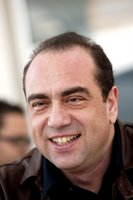
The application follows the decision of the Standing Committee on the Food Chain and Animal Health (SCFCAH) to back the Commission Decision on strict counter testing of all US rice imports. Speaking in a report by Andrew Bounds, in the Financial Times, Philip Tod, spokesperson for Markos Kyprianou (EU Commissioner for Health and Consumer Protection and pictured at right), said, "We can only be responsible for our own testing and controls ... It is incumbent on other countries to enforce theirs."

The US and Europe have yet to agree on a common testing regime. Floyd Gaibler, US Deputy Undersecretary for Farm and Foreign Agricultural Services, has been reported in Farm Futures as stating that the burden of mandatory testing will effectively end its rice trade with Europe: "it would just have the effect of not allowing trade to resume." European environment ministers are calling for international rules to improve the detection of contamination. This has been supported by EuropaBio, the European association for bioindustries. Simon Barber of EuropaBio told the FT, "Because we have a global trading system there is always the possiblity that minute trace levels of GMOs will turn up where they do not have legal approval. This is going to happen again and again." According to the Andrew Bounds, US GM proprietors "appear to have lost control of their technology."

Such "lost control" has prompted Greenpeace to demand immediate suspension of all US imports, asking for Bayer to be "held accountable for its negligence" by banning the company from conducting further trials. Greenpeace described Bayer as "clearly incapable of controlling contamination of rice with its genetically engineered varieties," after the discovery of a second illegal strain from Bayer in as many months. Meanwhile, US farmers are suing Bayer because of the commercial threat of contamination, closing markets and driving away consumers.

But a report in Thailand's The Nation describes the "burden" for the US as a "windfall" for Thai farmers. The report notes that the Thai government has remained committed to its non-GM policy. Open field trials were banned in 2001, but papaya farmers have had the ban lifted. But in light of the "windfall," Greenpeace has petitioned the Administrative Court to end open-field trials, as reported in the Bangkok Post. Greenpeace also filed a petition against the Department of Agriculture and its Director, Adisak Sreesunpagit, for negligence in preventing a leak of GM papaya seeds during a controlled field trial by Khon Kaen Horticultural Research Station in 2004. According to Patwajee Srisuwan of Greenpeace, contamination continues despite the Department's decision to elminate all GM papaya at Khon Kaen. Earlier this week, the Bangkok Post Business reported that Thai authorities have re-assured importers that Thai rice is GM-free.

The EU mandatory testing has also led India's top rice exporters and farmers unions to warn against further field trials for GM rice. A report by the BBC states that farmers insist that any doubt in the GM-free status of their rice will threaten their trade. And the newspaper, The Hindu, reports that leading rice exporters are concerned that restrictions now imposed on the US could be extended to other countries, including India, if contamination is not prevented . Reuters has reported that farmers and importers are concerned that contamination during storage or transportation will undermine not only consumer confidence but also India's reputation. According to the director of Tilda Riceland, RS Seshardri, "Indian rice is GM-free and we want to keep it that way."

And farmers are certainly taking action to keep it that way. The Bharatiya Kisan Union (BKU), a farmers union in India, recently destroyed a GM rice trial in Haryana. According to a report in the India Express, around 400 farmers, many from the Rampura village in the Karnal district of Haryana, met at the site of the trial, calling for its destruction for fear of GM contamination. The group then torched the trial in what the Indian Express described as a "serious setback" for GM field trials.

One of the protestors, Paramjit Singh, was in fact the farmer on whose land Mahyco-Monsanto was conducting the trial. A report in the Business Standard says that Mr Singh had not been informed that the trial was a GM trial. But nevertheless, the burning was described as "unwarranted" by the Department of Biotechnology (DBT) Review Committee on Genetic Manipulation (RCGM). Member Secretary of the RCGM, Dr TV Ramanaiah, appeared to dismiss the obligation to inform was apparently dismissed by Member Secretary, saying to the Business Standard, "Mahyco which grew the crop for contained field trial had our approval. So it was a legal activity. As for informing farmers, how do you expect every farmer to be told about the various experiments that are being done." How indeed. The Business Standard report states "Activists of BKU pointed out that neither the farmer nor the panchayat president were told of the trials, as is required under the regulations." The farmer had leased the land for contract farming at Rs 15 000.

Meanwhile, Mahyco has come under other "fire" recently, after the publication of the findings of an investigation by the Centre for Sustainable Agriculture (CSA) into Bt Okra trials in the Gulbarga district of Karnataka. The report notes also that the DBT Guidelines are not always being followed, leading to similar problems with information. The state government of Karnataka was unable to respond adequately to applications for information, admitting that it had no information on where GM trials were being undertaken in the region.

The Supreme Court of India banned new field trials of GM crops earlier this year, following a public interest petition filed in May 2005. The petition claimed inadequate biosafety protocols, including allowing field childs to commence prior to biosafety testing, were a serious threat to both public health and the environment. The Supreme Court ban is to allow for an examination of these approval mechanisms.

And recently, Iran's Department of Environment (DoE) has decided against issuing an official approval to commence cultivation of GM rice. According to reports, the DoE did not receive sufficient documentation to be convinced that the benefits outweighed the potential risks.

Back in Europe, resistance to GM among consumers remains high. A recent AFP report says that very little GM food ends up on the plates of European consumers. And the preferences of EU citizens have relevant and significant effects on the markets for EU member states, particularly those for organic products. Efforts to achieve meaningful co-existence measures for traditional, organic, and GM crops, are repeatedly undermined by contaminations.

The UK Department for Environment, Food and Rural Affairs (DEFRA) has recently received strong criticism for its coexistence proposals. According to a report in Farmers Weekly, a joint response by FOE, the Soil Association, and GM Freeze, to the government's coexistence consultation claimed that some of the proposals breached European law. In an FoE press release, Pete Riley, Director of GM Freeze, and Peter Melchett, Policy Director of the Soil Association, both condemn the proposals as removing the rights of consumers and farmers to choose. Clare Oxborrow, of FoE, said that "The proposals are a thinly veiled attempt to introduce GM crops through the back door." She said further, "Allowing routine, unlabelled, GM contamination of conventional and organic crops is not only unacceptable to the public, it is legally flawed too." The consultation closed Friday, 20 October.

Elsewhere in Europe, contamination continues to undermine arguments that coexistence can been meaningfully achieved. Planet Ark recently reported that organic farmers in Spain have been forced to abandon maize crops after detecting traces of GM strains. And farmers in Greece are taking action against Syngenta, Pioneer, and the Greek Government for GM maize contamination in 2004. The General Confederation of Greek Agrarian Association (GESASE).

Meanwhile, GM crops threaten to defeat Romania's ability to meet the deadline for banning GM "Roundup Ready" soybean crops. The deadline, an effort to meet EU environmental rules, is set at 1 January 2007, the same day Romania is to join the EU. Unlike many citizens in the EU, however, Romanians are reported as being less concerned about the regulation of GM. The Balkan Insight reports that "A poor level of compliance reflects the lack of interest in the subject felt by Romanian consumers." Whether this also reflects levels of awareness, information, or engagement in the debate is unclear.

And the push towards bilateral negotiations adds to these concerns. A report, Bilateral Biosafety Bullies, by GRAIN and the African Centre for Biosafety identifies a relationship between bilateral trade channels and an associated weakening in biotech regulations, in favour of opening markets for GM crops. This kind of regionalism threatens to undermine genuine multilateral negotiation. "The push to regulate - or rather, prevent the regulation of - GM food through bilateral instruments is not happening in isolation. It is part of a much larger trend in international relations."

But European consumers will continue to work to buck the trend.